
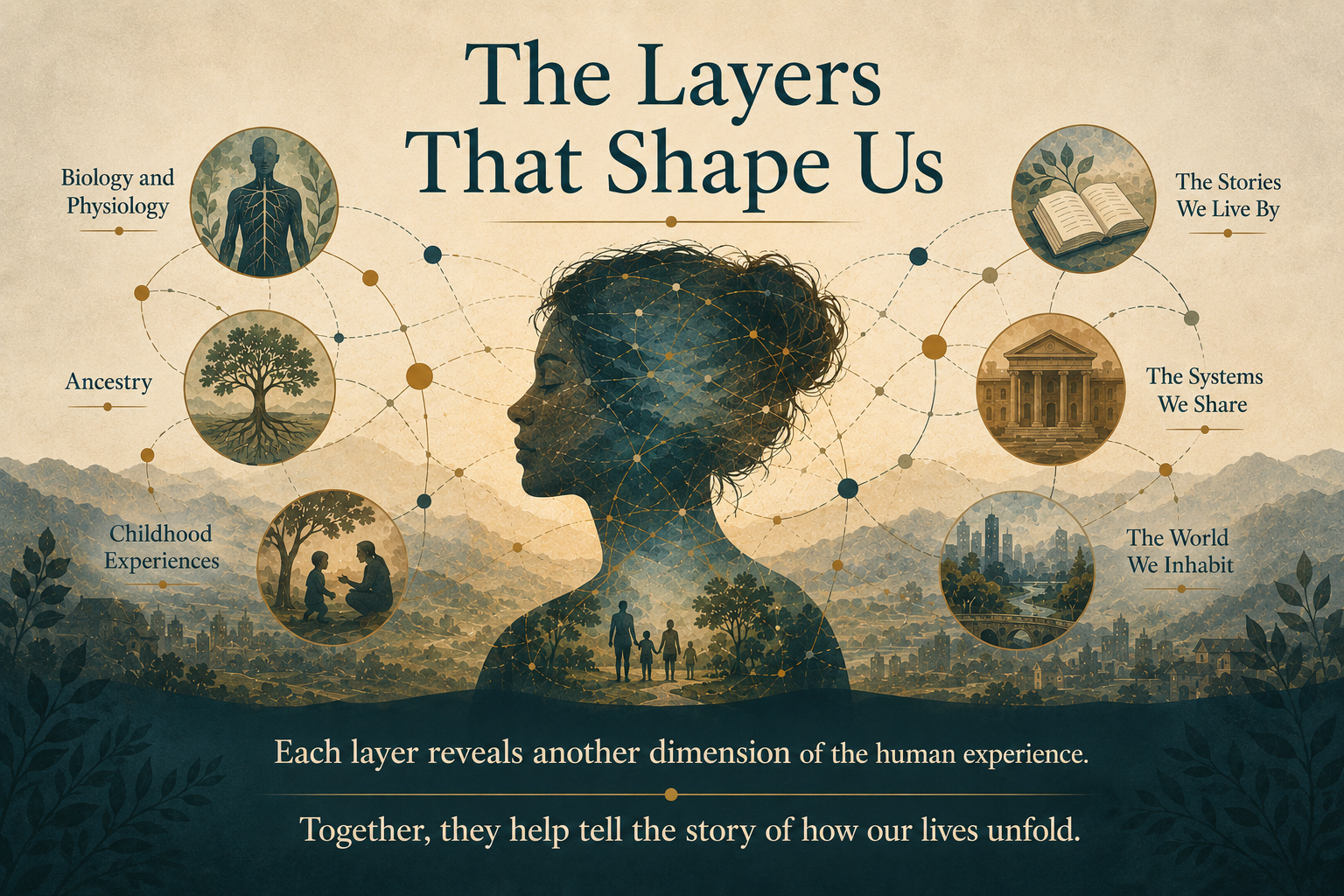
The conditions shaping our lives are deeply interconnected.
Some support balance, connection, and well-being.
Others sustain patterns of fragmentation, disconnection, and chronic imbalance.
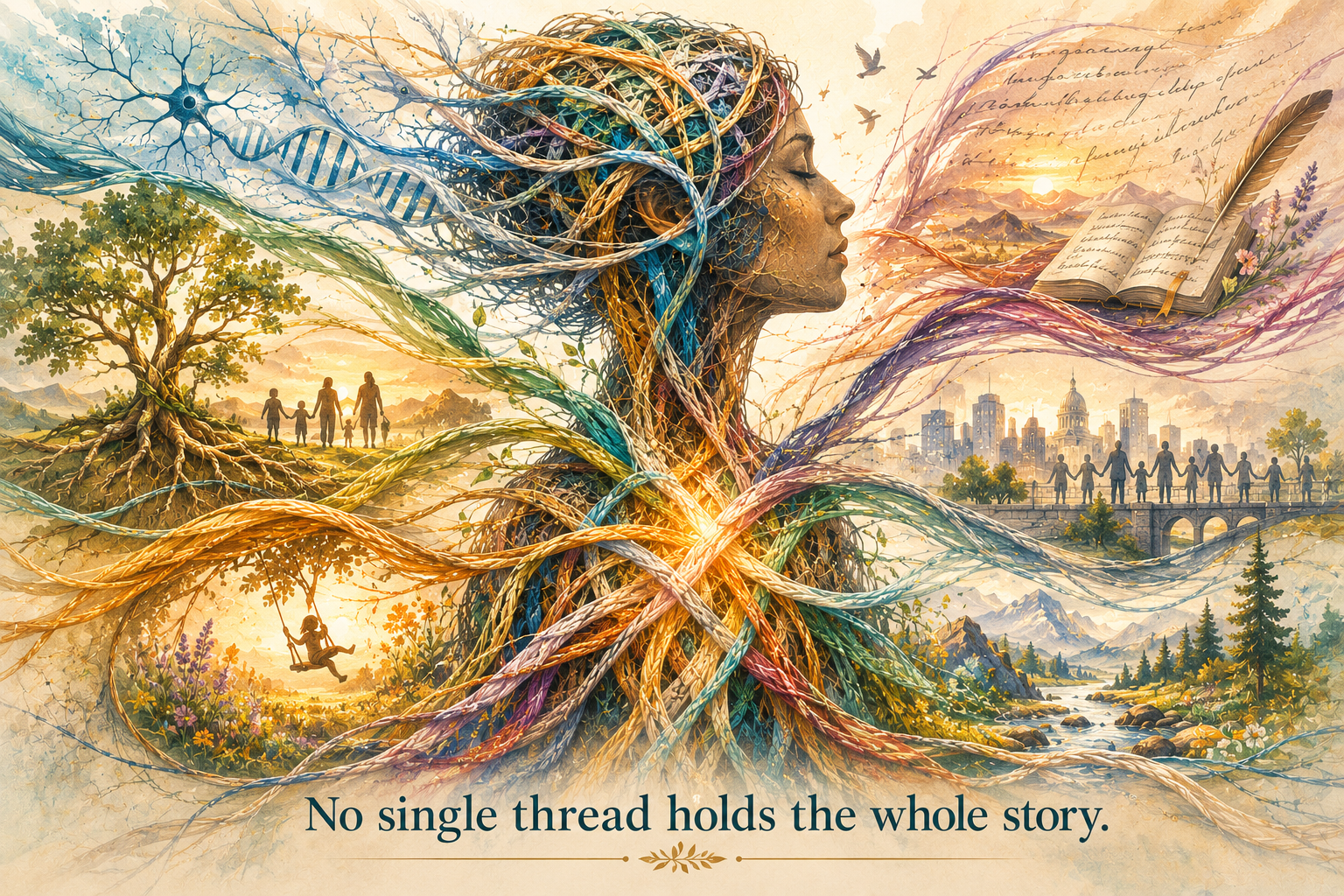
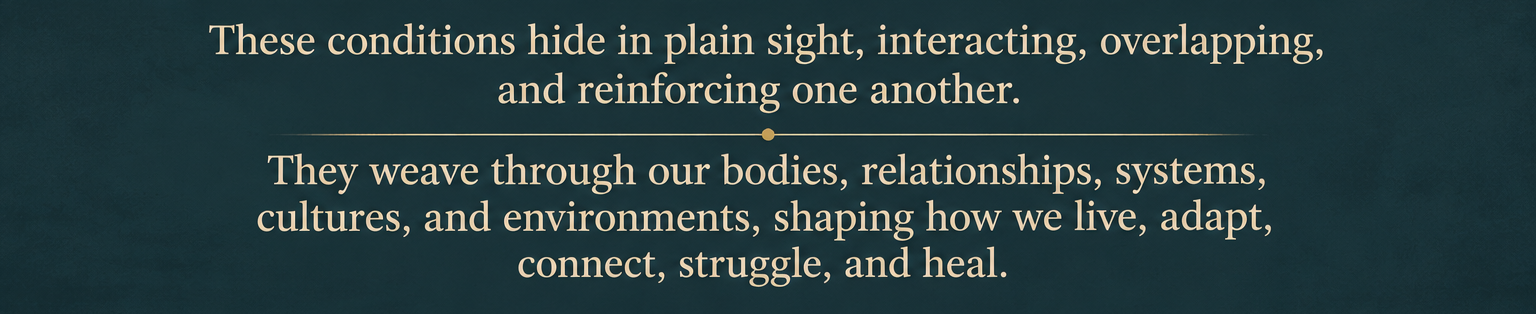
Some are inherited. Some are learned. Some are embedded within the systems and environments we inhabit.
Together, they shape the terrain of human experience.
-
Adaptation is one of the body's most remarkable capacities.
Our nervous systems are designed to respond to changing conditions, continuously adjusting to help us navigate challenge, stress, injury, uncertainty, and threat.
When difficult conditions become chronic, the adaptations designed to help us survive can fade into the background of awareness, even as they continue to influence our health, emotions, energy, attention, and capacity for connection.
Examples include nervous system dysregulation, chronic inflammation, toxic stress, sleep disruption, and trauma-related physiological adaptations.
-
We are born into this world carrying both the wisdom and wounds of previous generations.
Their experiences, adaptations, beliefs, relationships, and stories become part of the scaffolding that shapes how we understand ourselves, relate to others, and navigate the world around us.
Some of what is passed forward becomes a source of resilience, connection, belonging, and strength. Other inheritances carry forward adaptations shaped by trauma, chronic stress, loss, displacement, oppression, and adversity.
Recognizing what has been carried forward helps us better understand the patterns, strengths, and struggles that shape our lives.
Examples include intergenerational trauma, inherited survival patterns, family narratives, cultural memory, and epigenetic influences.
-
Long before we have words for our experiences, our relationships are teaching us how the world works.
Childhood is where we first learn:
• Is the world safe?
• Can I depend on others?
• Am I worthy?
• Do my needs matter?
• Do I belong?
• Do I matter?
Those lessons become the lens we use to understand ourselves, relate to others, and navigate the world around us.
Bringing our awareness to these early lessons helps us better understand patterns that continue to shape our relationships, behaviors, beliefs, and capacity for connection throughout life.
Examples include childhood trauma, relational neglect, attachment injuries, physical, sexual, and emotional abuse, inconsistent caregiving, chronic invalidation, and disrupted attachment.
-
Humans are natural storytellers.
We build our lives around the stories we inherit, the stories we are told, and ultimately, the stories we tell ourselves.
We are born into them.
We participate in them.
We shape them, and they shape us.
These stories help define our identity, morality, relationships, faith, culture, sense of belonging, and understanding of what is possible.
Understanding our stories helps us more clearly see the beliefs, assumptions, and patterns shaping our lives.
Examples include: cultural narratives, family belief systems, spiritual abuse, religious trauma, internalized shame, social norms, stereotypes, and limiting beliefs.
-
Interdependence is one of the defining characteristics of being human.
Every internal system in our body is interdependent. Every natural ecosystem is interdependent. Human flourishing has always depended on healthy relationships, strong communities, and the shared resources that sustain life.
The health of any system depends on the quality of the relationships within it.
When relationships are characterized by mutual care, trust, fairness, and reciprocity, those qualities ripple outward, strengthening individuals, families, communities, and the systems they depend on.
When relationships become fragmented, exploitative, or unjust, those conditions ripple outward as well, perpetuating patterns of chronic stress, disconnection, illness, and suffering across every level of human experience.
What emerges within any system reflects the quality of the relationships that sustain it.
Examples include: access to healthcare, education, housing, employment, economic opportunity, public policy, discrimination, systemic racism, poverty, community violence, and social exclusion.
-
Human beings are part of nature, not separate from it.
The air we breathe, the water we drink, the food we eat, and the technologies we use all influence how our bodies function, how our minds respond, and how we experience the world.
Environments that provide safety, beauty, nourishment, stability, and opportunities for connection support health and well-being. Environments characterized by pollution, instability, isolation, chronic noise, digital overload, or environmental degradation can contribute to chronic stress and imbalance.
Every environment communicates with the life within it.
The places where we live, learn, work, and gather become part of the conditions that shape how our lives unfold.