
Power & Control

Why Power and Control Matter

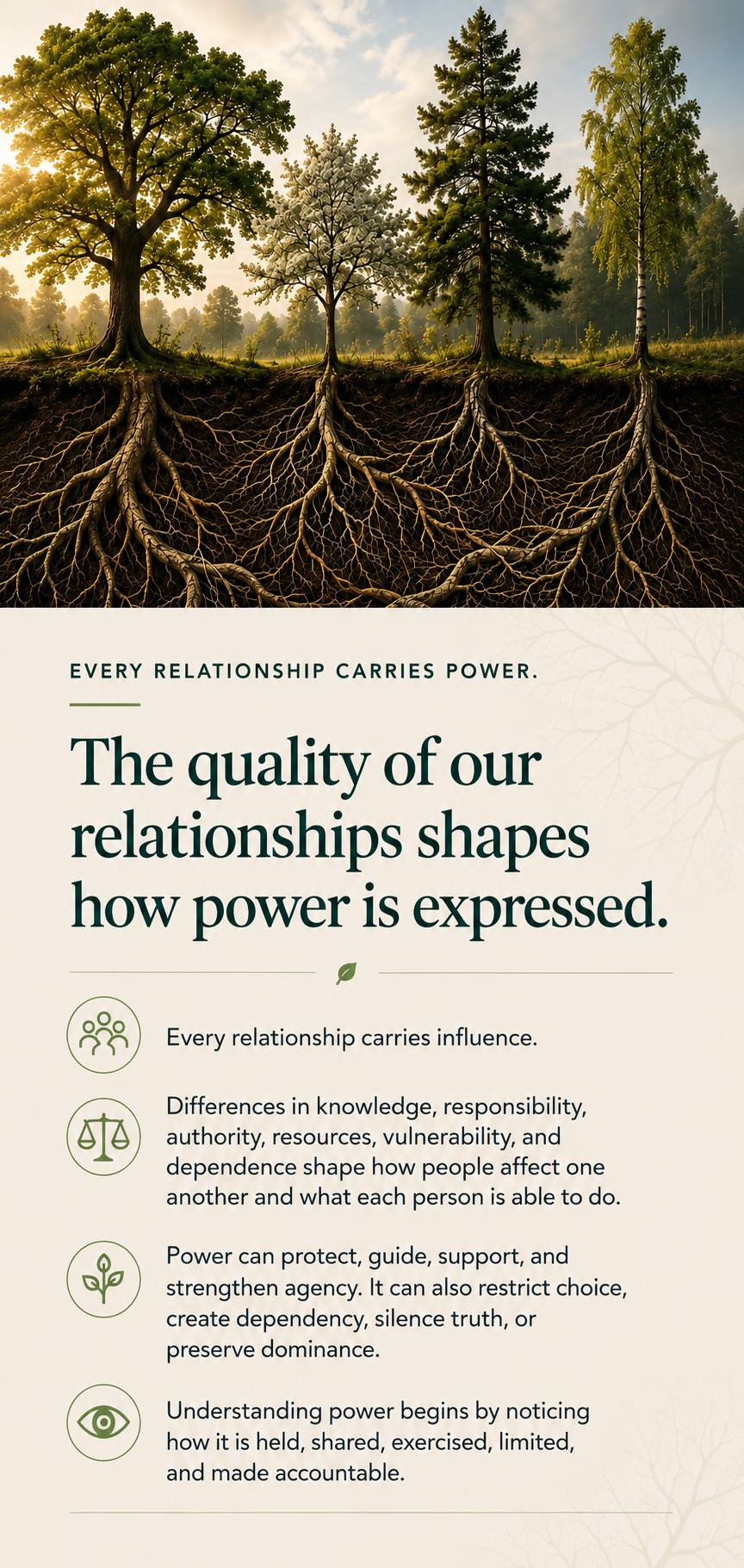
Harm takes shape within relationships, institutions, and cultures that define who holds power, how it is exercised, and whose voices are believed. Harm does not emerge randomly or solely from individual behavior as we have been taught.

When power is exercised through control, coercion, or distortion, harm becomes patterned rather than incidental. It repeats, adapts, and often remains hidden in plain sight, especially when these dynamics are normalized, rewarded, or left unacknowledged.

The Power & Control framework exists to make these patterns visible.

What the Power & Control Wheel Reveals

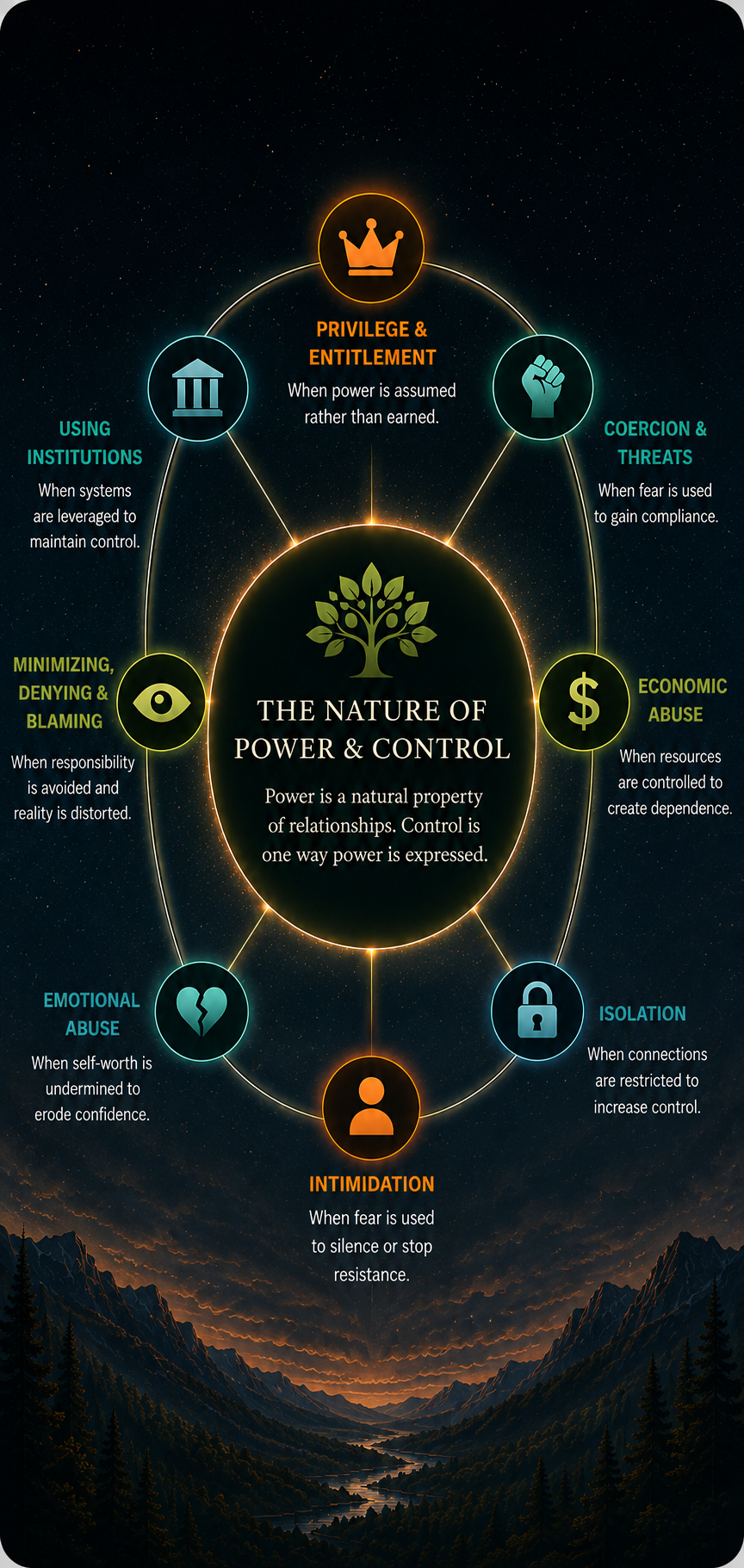
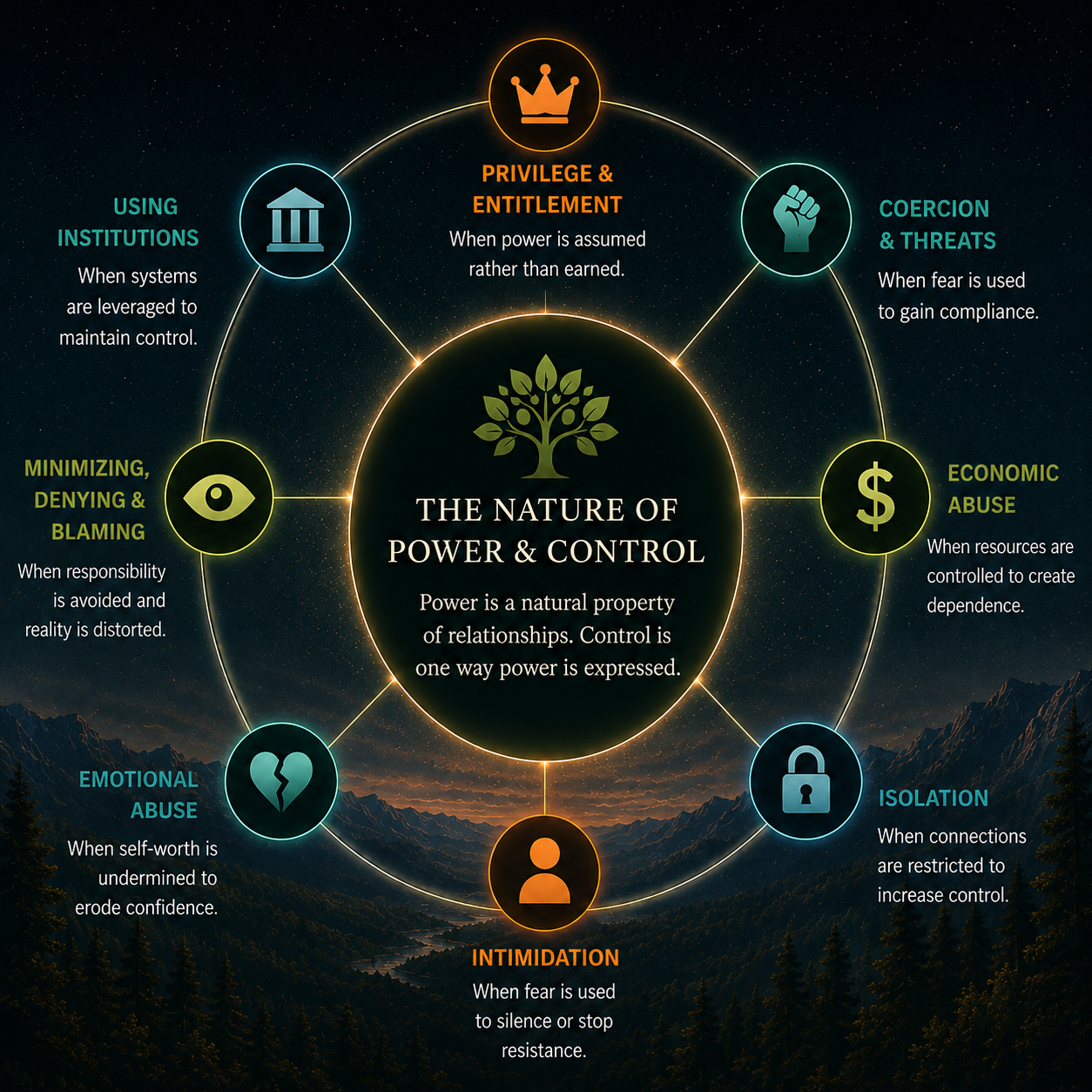
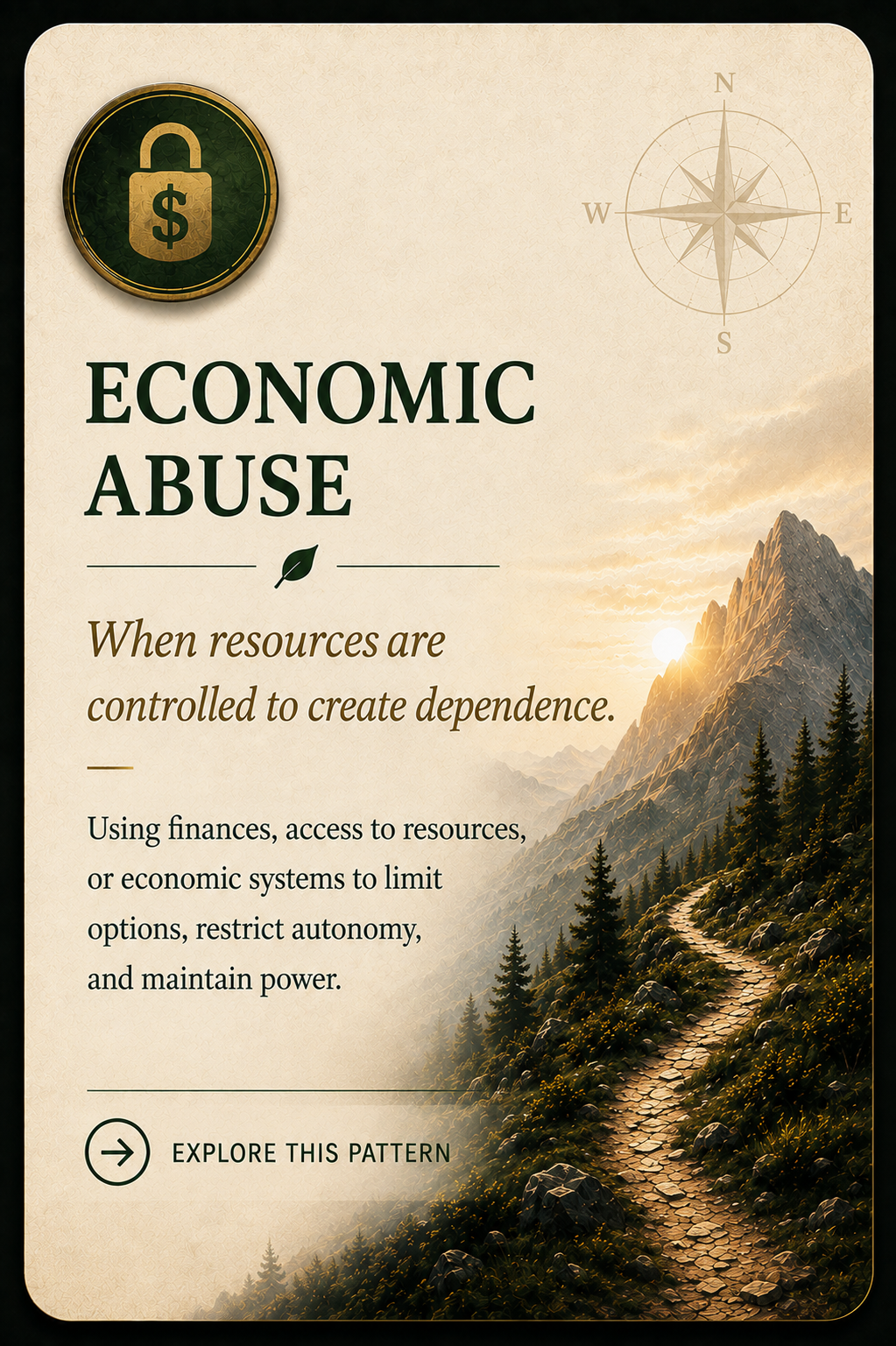
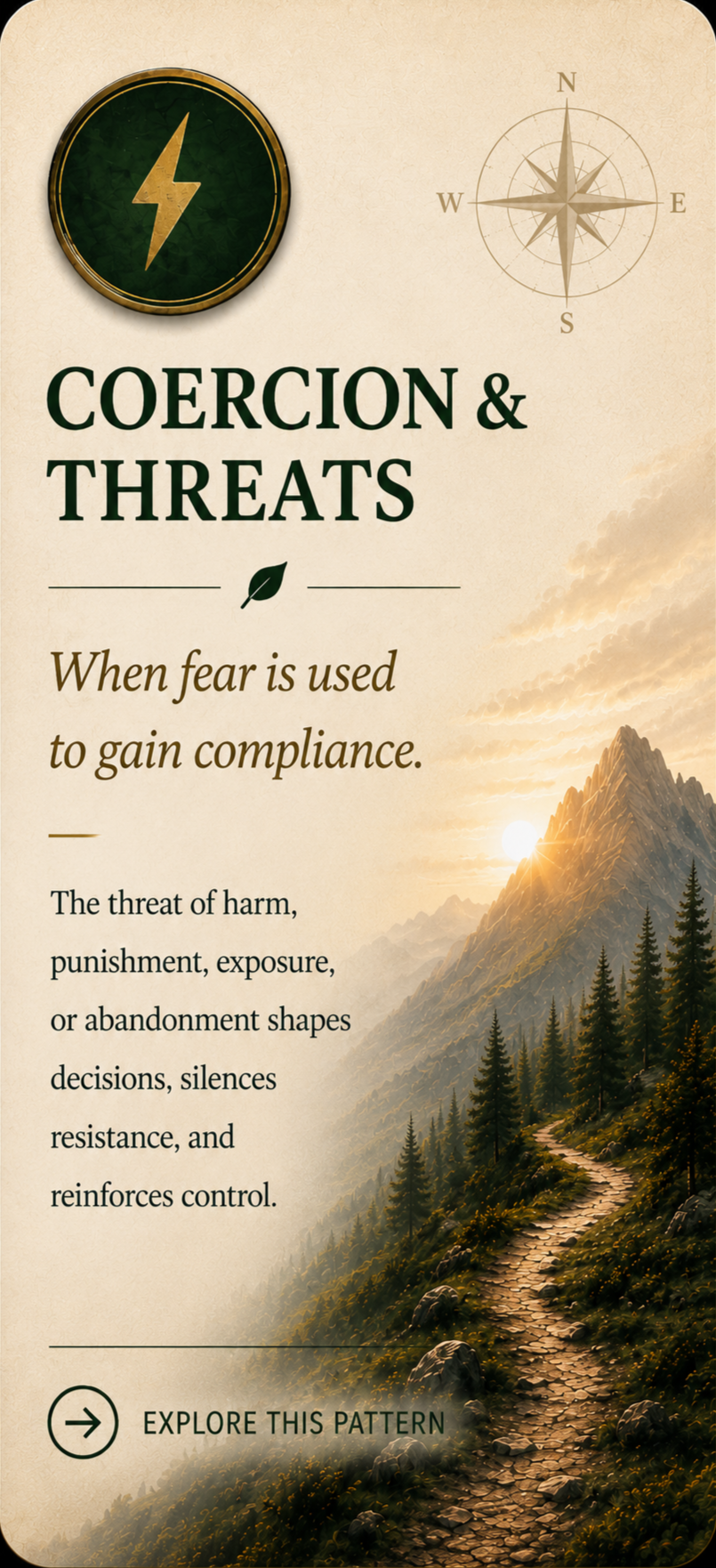
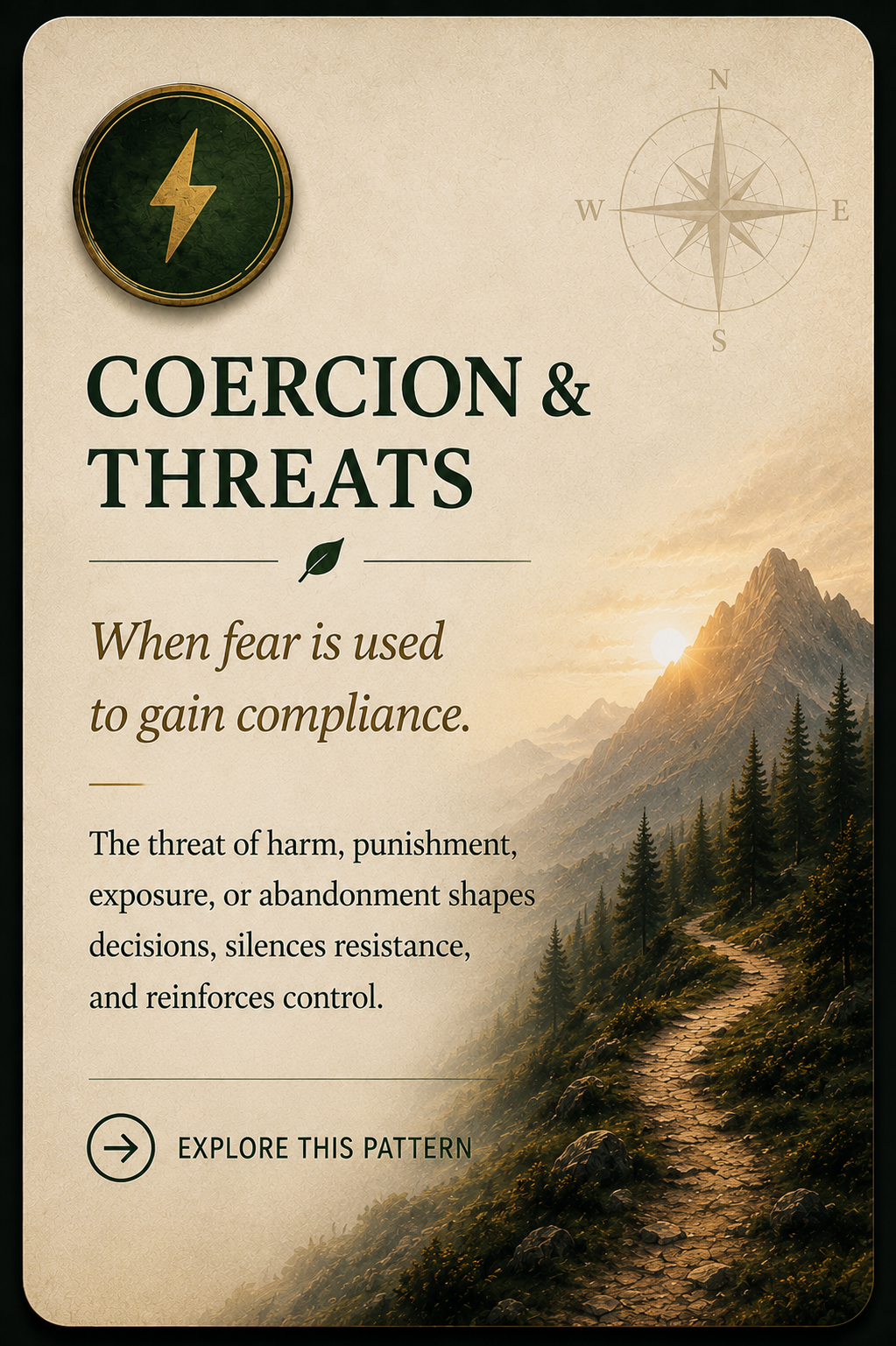
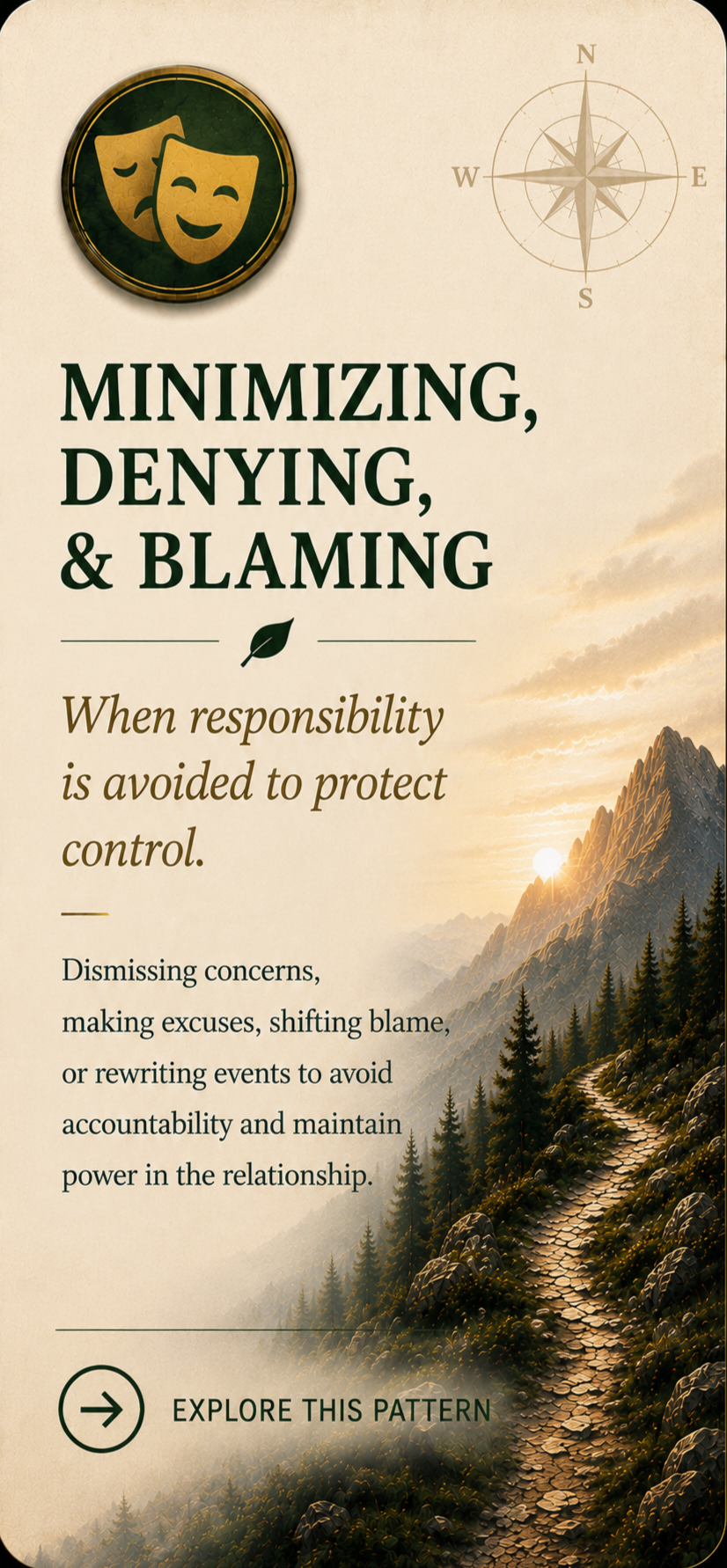
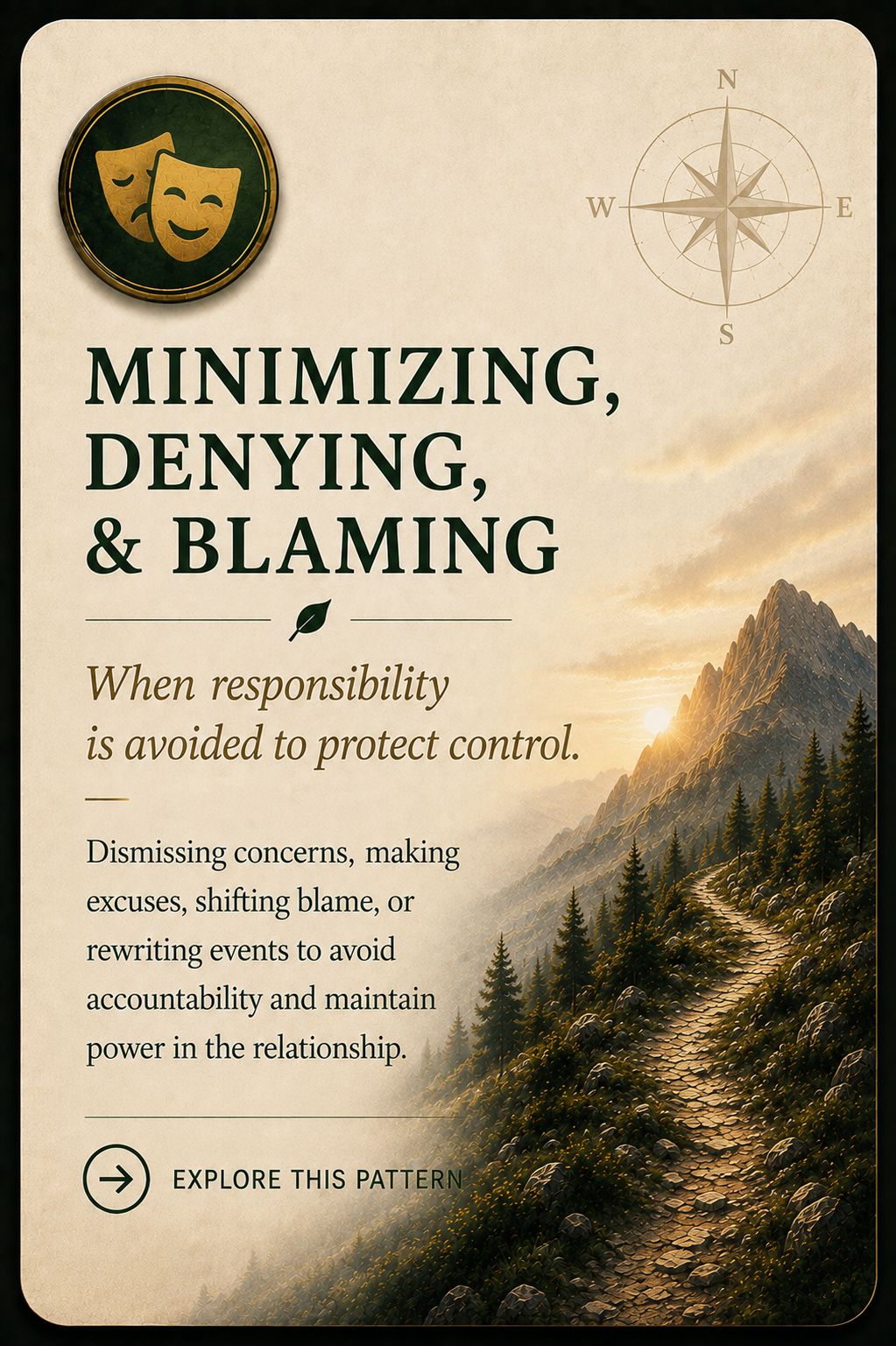
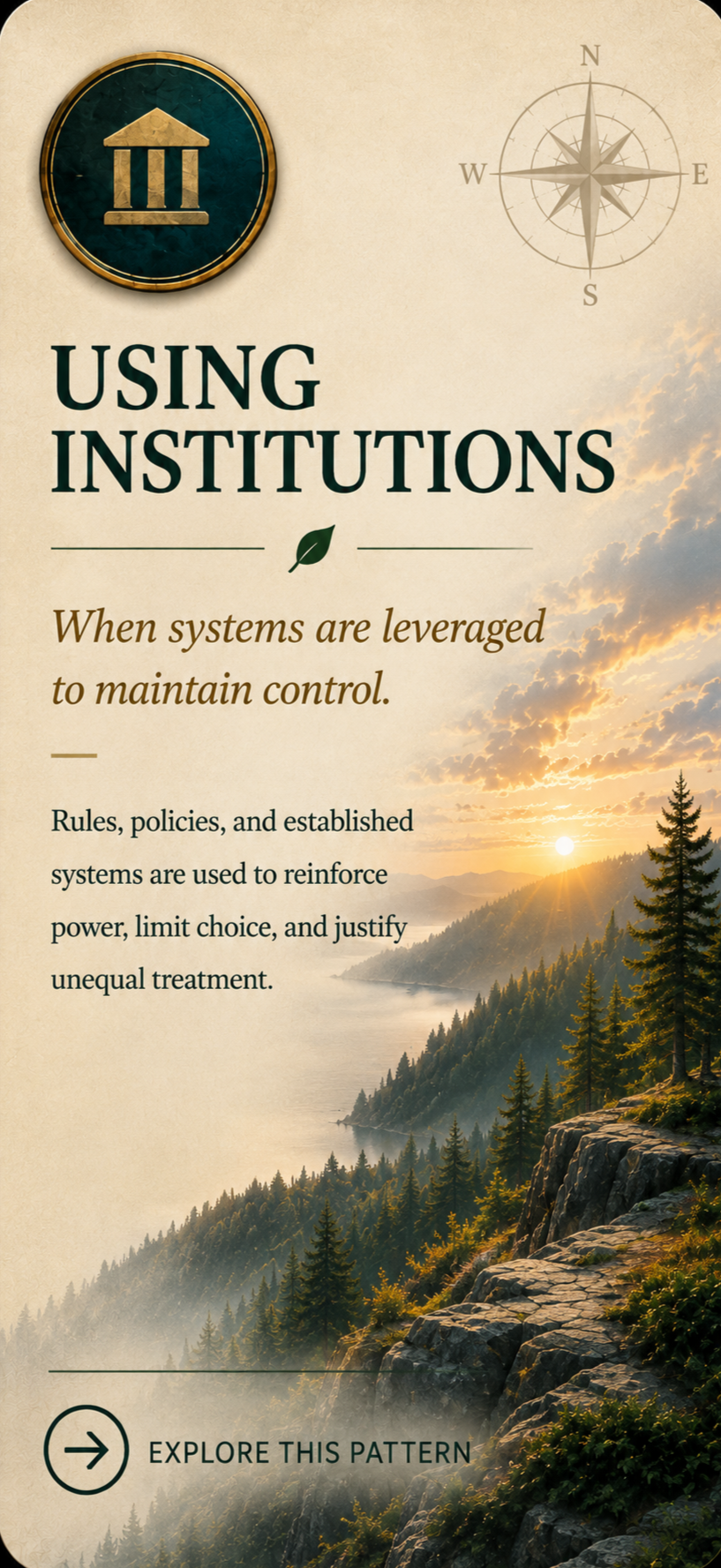
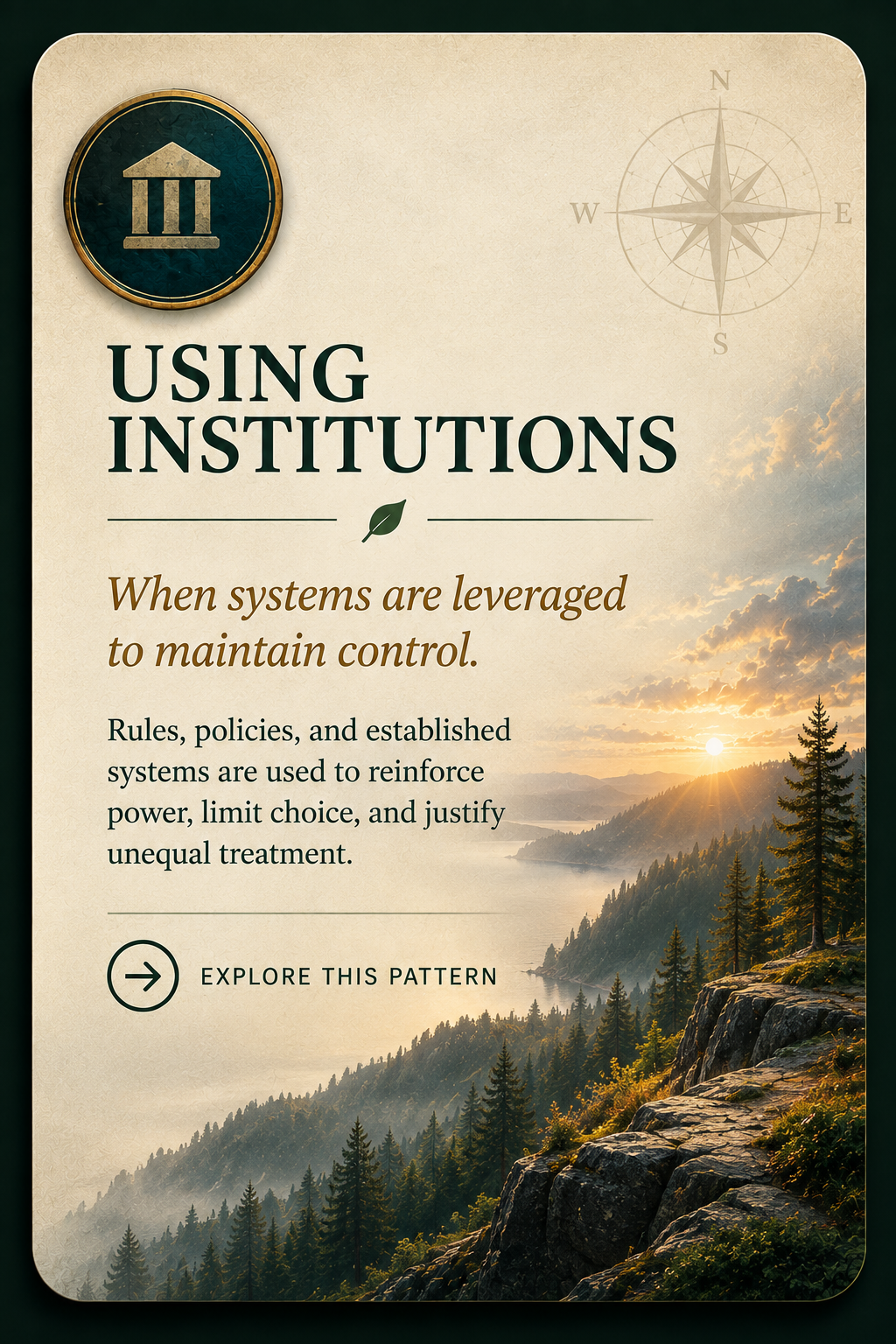
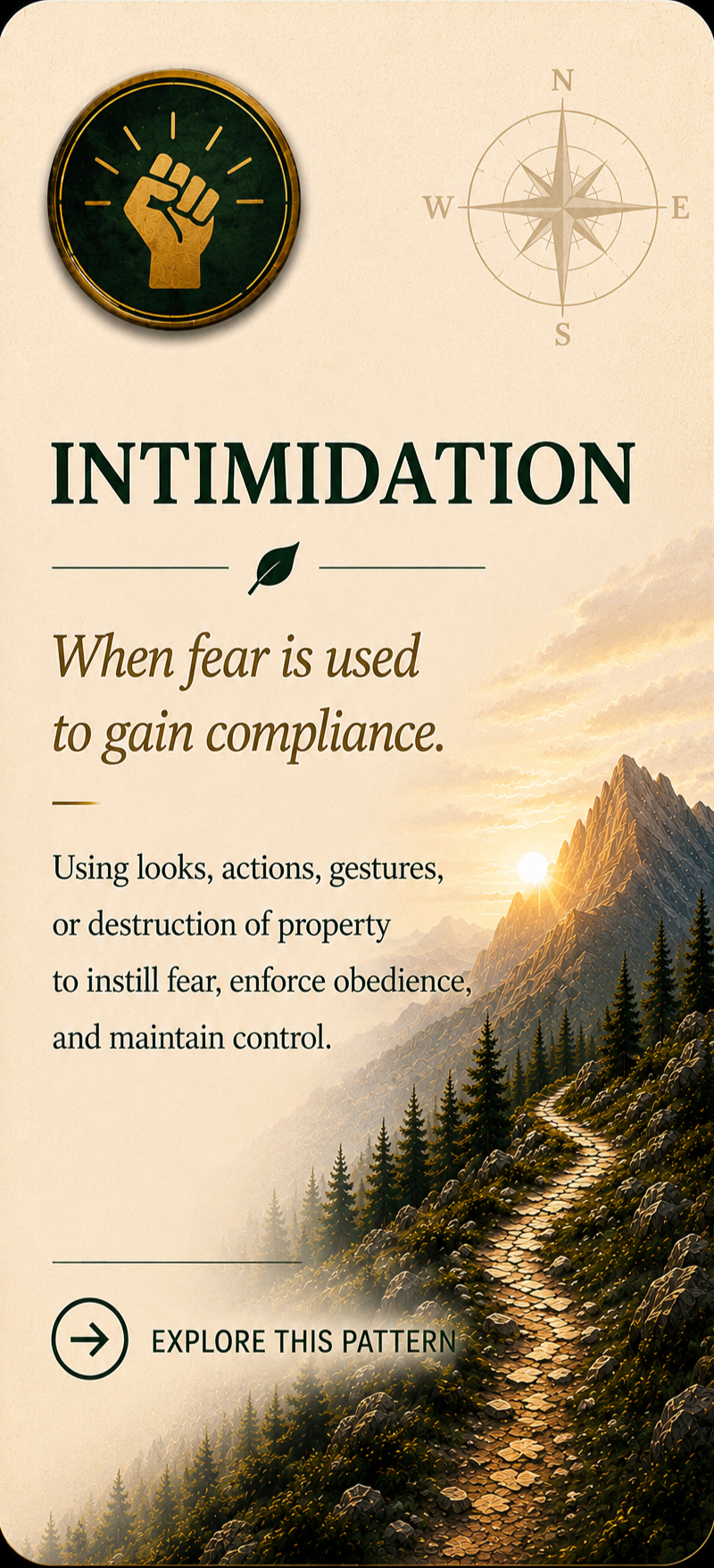
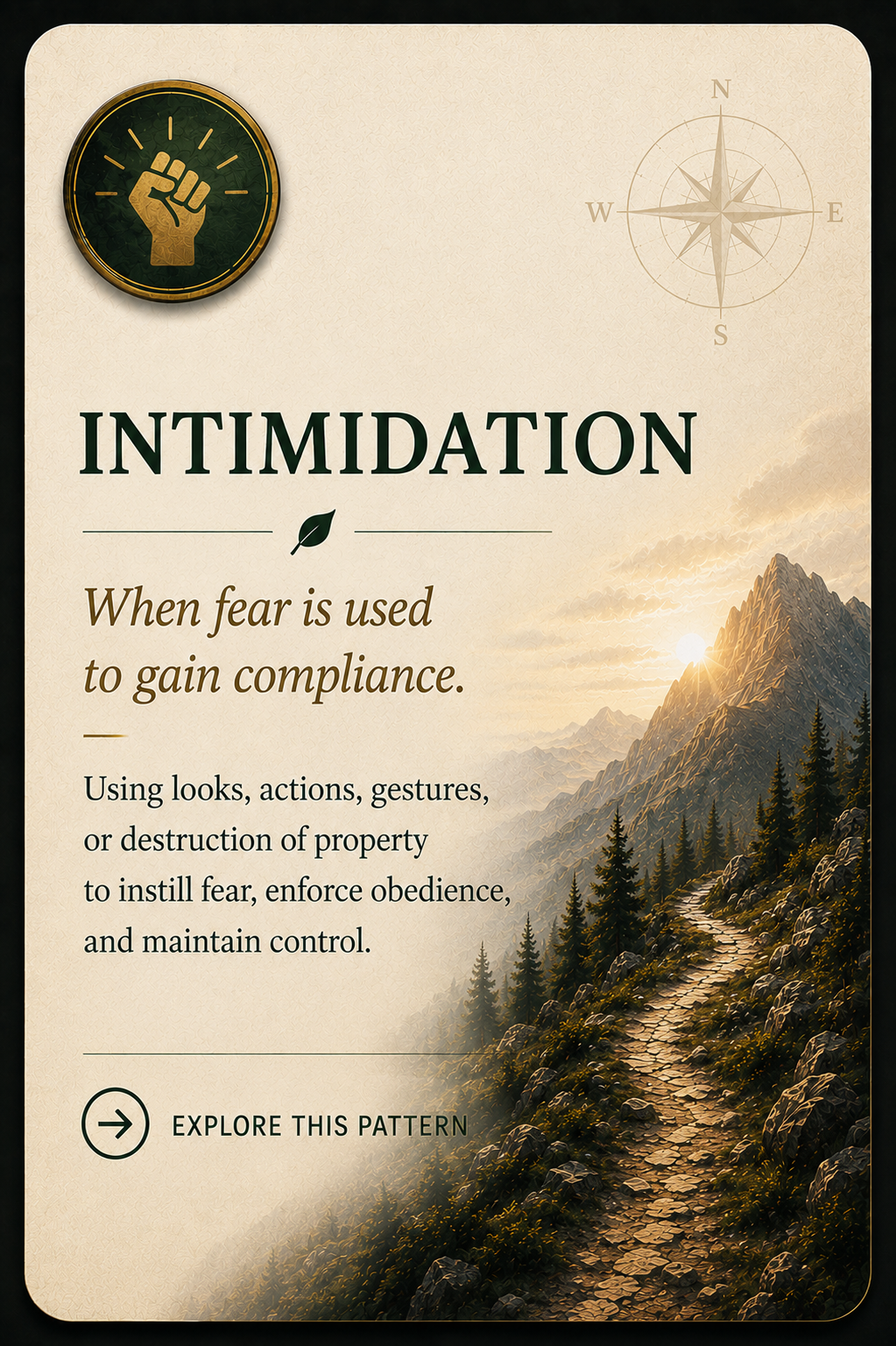
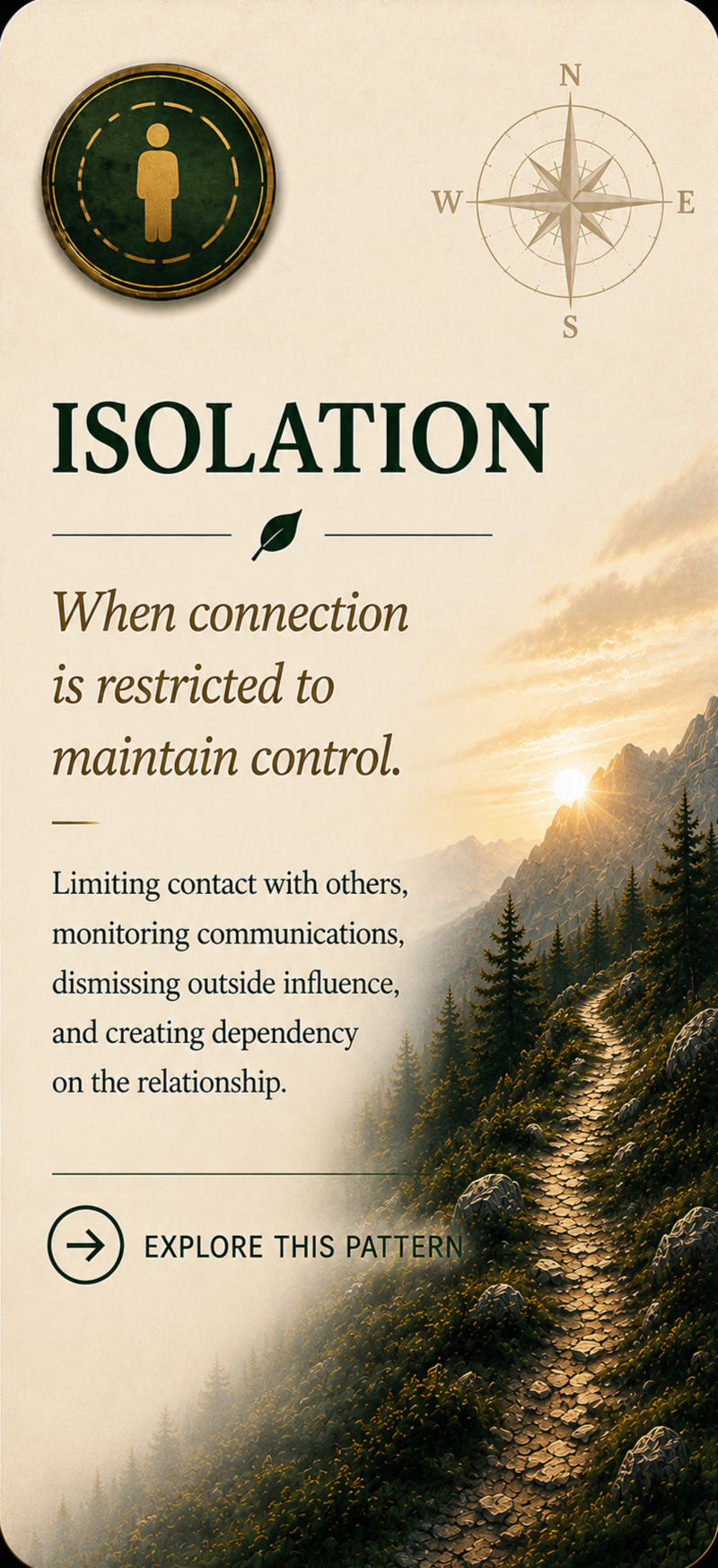
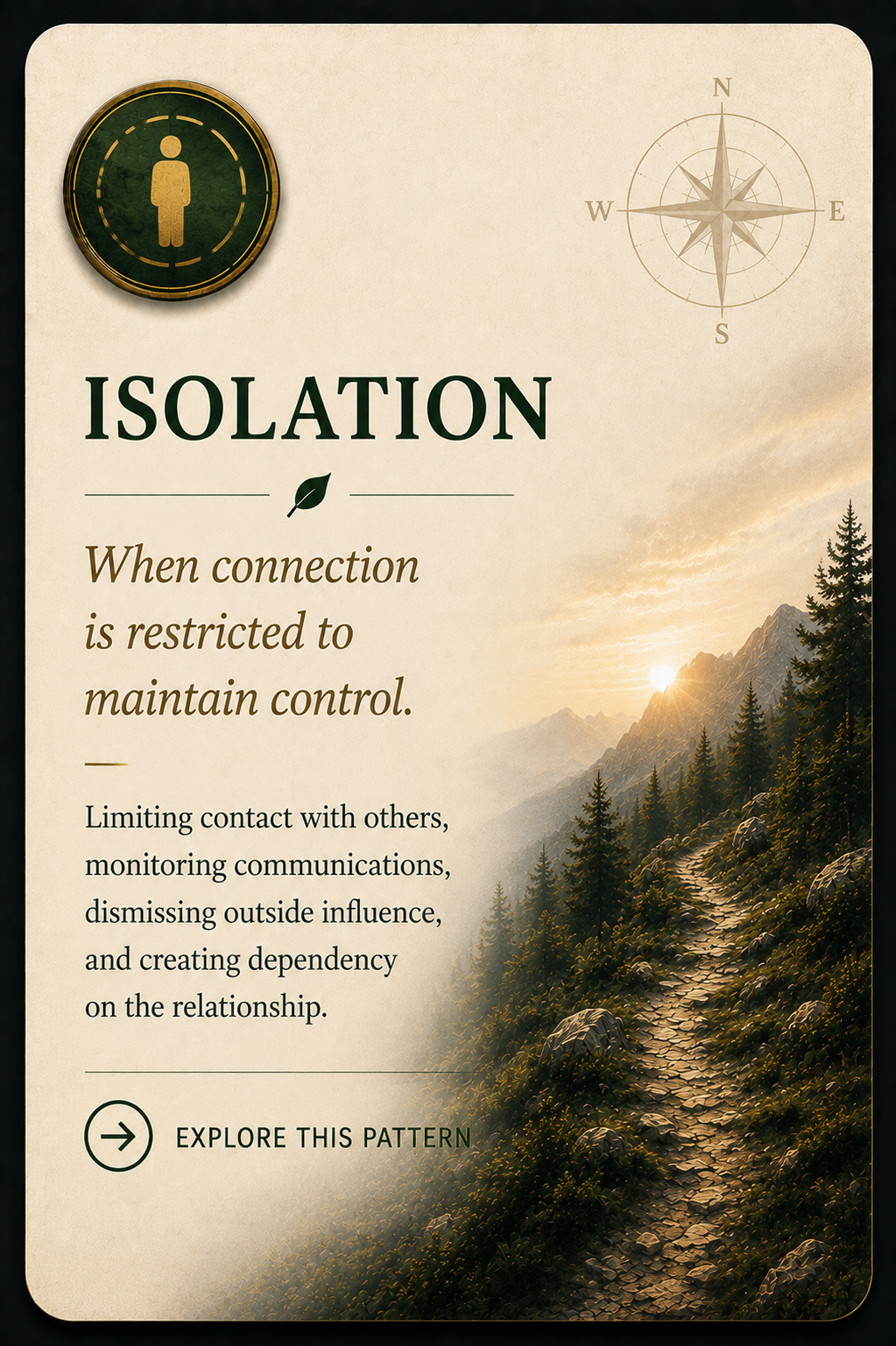
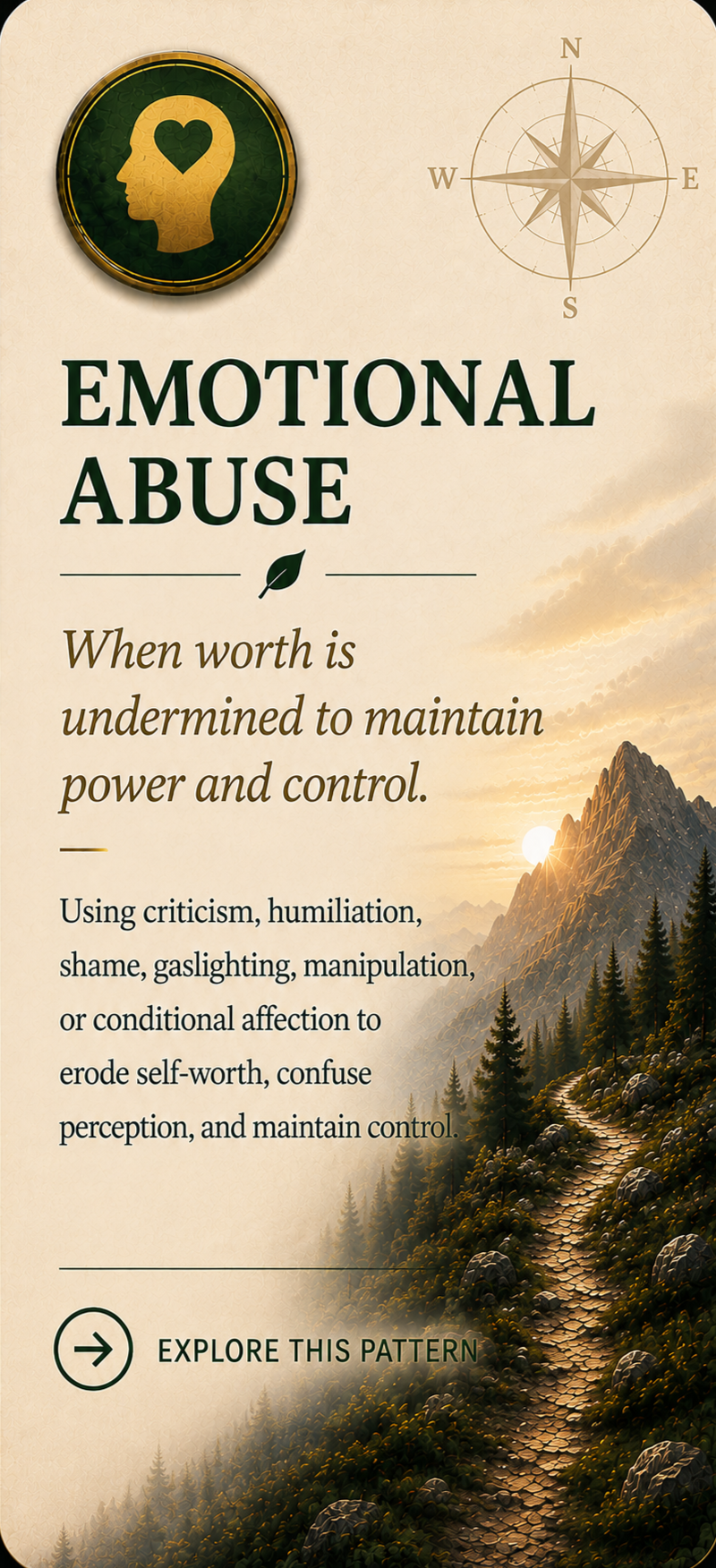
The Power & Control Wheel illustrates how harm is maintained through interconnected behaviors that reinforce dominance, silence, and imbalance.

Rather than focusing on single acts, the Wheel helps us see how control operates as a system—shaping environments in which harm can persist even without overt violence.

By naming these patterns, the framework shifts our attention from isolated moments to the broader dynamics that sustain them.

Systemic Power & Control Wheel™

The Power & Control Wheel illustrates recurring patterns through which harm is sustained when power is exercised through dominance, coercion, or distortion. It is intended as a lens for recognition, not a checklist for judgment.

From Interpersonal Harm to Systemic Pattern

While the Power & Control Wheel originated in the context of interpersonal violence, its relevance extends far beyond personal relationships.

Similar patterns of control, coercion, and silencing appear across institutions, policies, and cultural norms—particularly when efficiency, authority, or compliance are prioritized over dignity, safety, and truth.

When these dynamics are unexamined, harm is often minimized, misattributed, or absorbed by those with the least power to challenge it.

Why Visibility Changes Accountability

Accountability requires more than identifying who caused harm. It requires understanding how harm was enabled, protected, or ignored.

By making power dynamics visible, the Power & Control framework helps systems move beyond reaction and toward responsibility, without collapsing complexity into blame or bypassing impact.

  • Visibility interrupts normalization.

  • Naming patterns disrupts repetition.

  • Truth creates the conditions for safety.

How This Framework Is Used

Within HLBI’s work, the Power & Control Wheel is used as a lens, not a checklist.

It supports:

  • Pattern recognition across individual and systemic contexts

  • Conversations about responsibility without domination

  • Clearer distinctions between accountability and punishment

  • Responses that reduce harm rather than reproduce it

The Wheel is most effective when held alongside other frameworks that address biological, relational, and systemic conditions.

A Grounded Invitation

This framework invites us to look honestly at how power operates in relationships, in systems, and in ourselves.

When power is understood, responsibility becomes possible.

When responsibility is supported, harm can be interrupted.

You are invited to explore how this lens can deepen our understanding and reshape our responses.