
Foundations of Coherence
The Architecture of Balance and Reciprocity

Healing will not last if we keep our systems the same.
This layer is about replacing the architecture of harm with systems grounded in care, accountability, and ecological alignment. These are the values and conditions that make coherence possible.
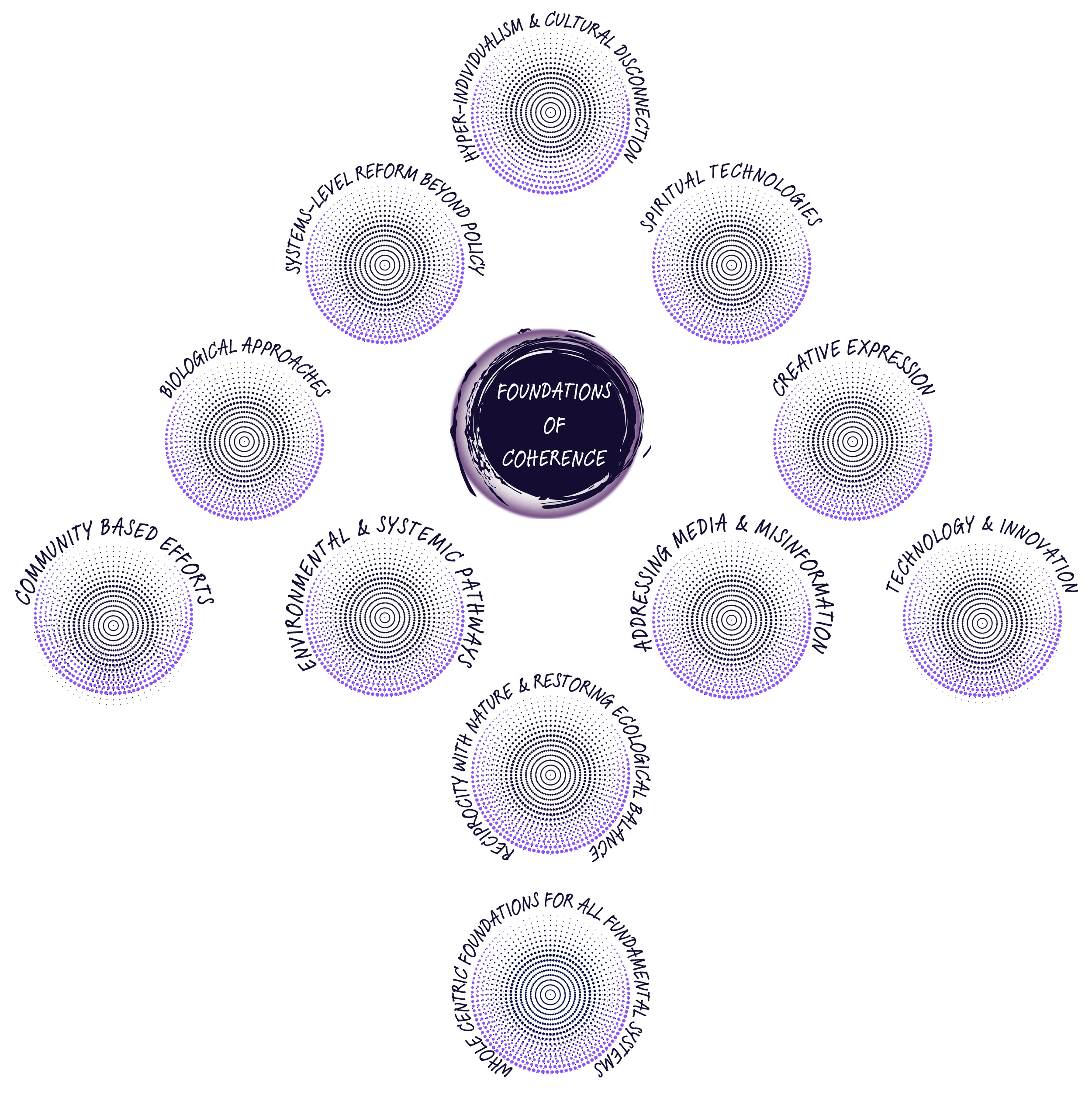
The following domains offer pathways toward sustainable coherence, each one a necessary force in the architecture of repair.
-
Changing laws or leaders won’t matter if the logic of harm remains intact. True reform must be structural, not superficial, rooted in accountability, redistribution, and redesign at every level.
-
Coherence cannot arise in systems that erase difference. This domain centers diverse ways of knowing, healing, and living, especially those marginalized by Western supremacy, and asks what it means to build a world that honors multiplicity.
-
This goes beyond environmentalism. It’s the design of human life in alignment with living systems, from how we build cities, grow food, and generate energy to how we move, rest, and relate. Nature isn’t a backdrop. It’s the blueprint.
-
Designing systems that don’t rely on depletion or domination. This includes bioregional governance, climate-informed infrastructure, and ecological justice frameworks that protect both people and planet.
-
Coherence requires clarity. Our information ecosystems must be reclaimed from confusion, manipulation, and performance. We need media rooted in integrity, dialogue, and truth, not fear and spectacle.
-
Across cultures, people have developed ways to remember what matters: ritual, story, stillness, breath, song. These aren’t escapist, they’re essential. They help us metabolize grief, remember beauty, and stay present to the work ahead.
-
No coherent system can grow from ideologies of supremacy, purity, or control. We must seed cultures that are pluralistic, relational, anti-oppressive, and regenerative, not reactive and extractive.
-
Art is not decorative, it’s diagnostic and visionary. Through music, poetry, design, and storytelling, we process trauma and imagine new worlds. A coherent culture requires space for creation.
-
Innovation must be accountable. Tools should enhance dignity, not extract data; expand access, not deepen surveillance. Coherent systems ask: what is this innovation in service to?
-
Lasting change lives in local, relational containers. Mutual aid networks, neighborhood coalitions, interfaith dialogues, and restorative circles are where the theory of coherence becomes lived practice.
-
Food. Water. Rest. Shelter. Safety. Time.
If these are not guaranteed for all, coherence cannot exist. This is not a utopian ideal, it’s a moral and biological requirement.