
Manifestations of Imbalance
Harm in Bloom
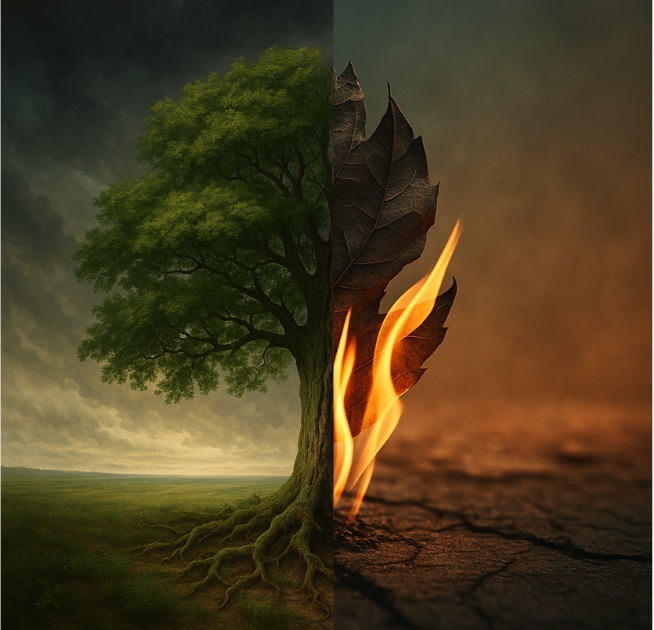
This layer names the visible expressions of imbalance, the emotional, physical, relational, and cultural signals that arise when the root causes go unaddressed. These are often misdiagnosed as exclusively personal failings, but they are actually intelligent responses to a world that is fundamentally hostile to our biology.

-
When pain cannot be acknowledged or processed, we protect ourselves in the only ways we know.
These include dissociation, repression, emotional detachment, spiritual bypass, denial, intellectualization, and hyper-control. These defenses often form unconsciously, but over time, they can calcify into identity.
-
Imbalance does not look the same at every age. Children may exhibit behavioral outbursts or learning delays; adolescents may present with risky behaviors or withdrawal. Adults may experience burnout, addiction, or emotional numbing.
Without attuned support, these manifestations often evolve and compound over time.
-
Emotional flooding, numbness, intrusive thoughts, shame spirals, rage, panic attacks, and pervasive sadness are common responses to chronic stress and unresolved trauma.
These are deeply patterned signals that reavel prolonged disrption of something fundamental.
-
Chronic imbalance impairs attention, memory, executive functioning, and cognitive flexibility.
Learning becomes difficult when survival takes precedence. Many people internalize these disruptions as personal deficits, when in fact, they’re signs of a nervous system under threat or overstimulation.
-
Without intervention, many of these manifestations intensify or become chronic.
What begins as burnout can progress into collapse. Emotional overwhelm may become anxiety disorder; pain may become autoimmune illness.
Chronicity becomes a condition in our body when all other signals have gone unaddressed or unresolved.
-
Imbalance impacts how we attach, connect, and protect ourselves in relationship.
Survival behaviors may include people-pleasing, emotional caretaking, clinginess, avoidance, controlling dynamics, or difficulty setting boundaries.
These patterns often arise from relational wounds, and can repeat if unexamined.
-
Over/under-eating, substance use, overwork, compulsive helping, chronic avoidance, self-isolation, or risky behaviors are often misread as moral failings.
They are, in fact, creative adaptations, ways of coping when core needs go unmet or pain goes unnamed.
-
The body becomes the archive for everything the system can’t metabolize.
Chronic pain, autoimmune flare-ups, headaches, sleep disruption, hormonal dysregulation, and digestive distress are often not the root issue, but the body’s alarm system sounding in response to deeper harm.
-
In digital spaces, we fragment.
Online life can lead to curated selfhood, overstimulation, false connection, and body disassociation.
This can heighten comparison, loneliness, and internalized shame, especially in vulnerable developmental stages.
The digital self is often both shield and illusion.
-
When trauma severs the connection to the body, we may lose touch with sensation, instinct, or presence.
Many people live from the neck up, navigating life through thought alone. This disconnect makes it difficult to feel joy, set boundaries, or regulate emotion, because the body's wisdom is offline.
-
Mass shootings, pandemics, wars, political violence, and climate disasters generate collective trauma.
For many, these are chronic, overlapping realities. Living in prolonged crisis creates grief waves, hypervigilance, distrust, and community fragmentation.